
HYDROGEN VALUE CHAIN
Enabling Europe’s Hydrogen Backbone: compression technology for large-scale storage
October 7, 2026 7 min read
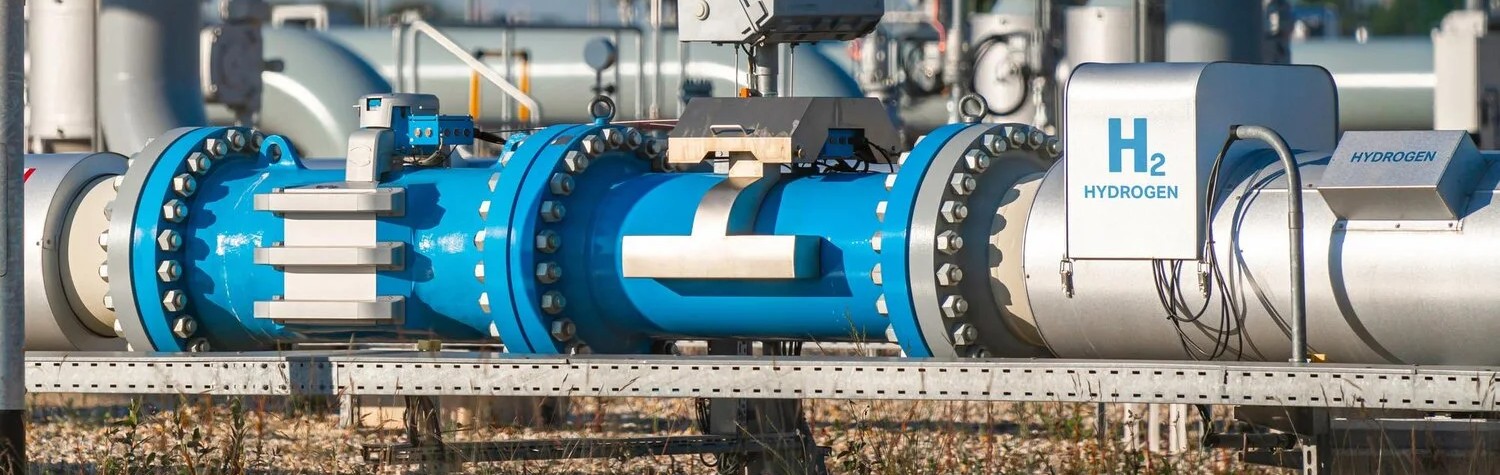

Our strategy to support the energy transition comes alive through our role in one of Europe’s most ambitious hydrogen projects, the European Hydrogen Backbone. It starts with underground storage and the compression technology that makes it work.
Hydrogen is an important component of the European Union’s (EU) energy transition, helping reduce dependence on Russian gas imports and supporting the goal of reaching net zero by 2050. The 2022 REPowerEU Strategy sets out the aim of producing 10 million tons and importing 10 million tons of hydrogen by 2030. By 2050, renewable hydrogen is to cover around 10% of the EU’s energy needs, significantly decarbonizing industrial processes and the transport sector.
A cross-border hydrogen pipeline
The European Hydrogen Backbone (EHB) initiative plays a pivotal role in enabling the EU’s large-scale hydrogen market by creating a cross-border pipeline network.
It is driven by a consortium of European gas and hydrogen infrastructure operators and currently involves more than 30 gas transmission operators covering all EU countries as well as Norway, Switzerland, the UK and Ukraine. This vast network will connect major industrial zones, ports, storage sites and import corridors, creating a genuine single European hydrogen market.
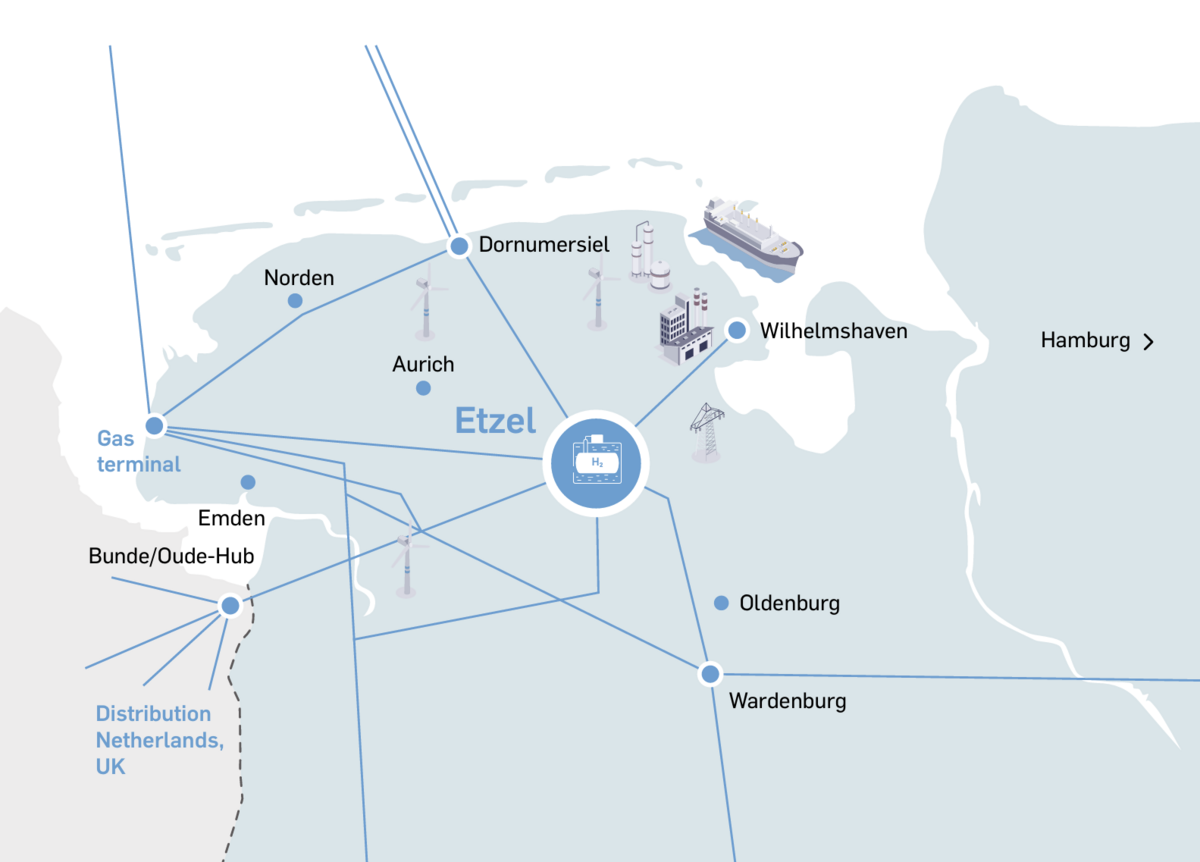
Etzel: a future hydrogen storage hub in northwest Europe
Around 60% of the approximate 53’000 km EHB pipeline network that plans to be built by 2040 will be created by repurposing existing natural gas pipelines and infrastructure. The Etzel project in Lower Saxony, Germany, a storage conversion initiative involving Burckhardt Compression technology, is a perfect example of such repurposing.
Before the salt caverns that were used to store crude oil and natural gas can be converted into a fully functioning hydrogen storage facility, several tests must be performed. That is why in 2022 the H2CAST Etzel pilot project was initiated to check whether hydrogen could be safely stored, extracted, recompressed and reused from existing caverns. For the pilot to succeed, two key aspects must be demonstrated:
- cavern tightness, ensuring that no unacceptable leakage or gas contamination occurs; and
- resilience under cyclical operation, proving that the system can withstand repeated gas injection and withdrawal
Putting our compressors to the test
For the H2CAST Etzel pilot project, we supplied a high-pressure, oil-free hydrogen compressor designed specifically for underground storage operation for the customer Gasunie — a Dutch gas infrastructure operator.
At the project site, hydrogen must be compressed, pressure controlled, dried and then monitored to ensure that the gas withdrawn from the cavern meets the quality standards for re-usage when it is fed back into the network. Building on our established compression know-how, the key discussions with Gasunie focused on ensuring seamless integration of the compressor into the wider above-ground system that enables controlled hydrogen injection and withdrawal cycles while meeting strict pressure and gas quality requirements.
In this way, our involvement directly supports the pilot's objective of proving that existing salt caverns can be reliably converted for underground hydrogen storage under real operating conditions.
Hydrogen storage at Etzel: Key questions answered
| Why was it necessary to initiate the H2CAST Etzel pilot project? | The salt caverns that previously stored crude oil and natural gas had to be tested to check whether hydrogen could be safely stored, extracted, recompressed and reused from the caverns. |
|---|---|
| Why did the customer Gasunie choose our compressor for the pilot project? | Gasunie trusted our proven compression technology. They required seamless integration of the compressor into the wider above-ground system that enables controlled hydrogen injection and withdrawal cycles while meeting strict pressure and gas quality requirements. |
| What was the benefit of equipping the compressor with a monitoring system? | The high-pressure, oil-free hydrogen compressor we provided for the H2CAST pilot project is equipped with the UP! Detect monitoring system. It monitors the compressor's condition providing valuable insight into its performance under real-life storage conditions. |
Digital services: monitoring compressor health for underground hydrogen storage
Our contribution to the H2CAST Etzel pilot project extends beyond compression technology to include digital monitoring services. The hydrogen compressor supplied for the project is equipped with UP! Detect, our cloud-based condition monitoring solution. It provides real-time insights into compressor performance.
By continuously monitoring the compressor's condition, the system supports proactive maintenance strategies, helping to reduce unplanned downtime while increasing availability and operational safety. The data generated during operation also improves understanding of hydrogen compression under real storage conditions. In this way, our monitoring services support the project's goal of making underground hydrogen storage scalable for the future EHB pipeline network.
First test successful
In March 2026, the H2CAST Etzel pilot project reached an important milestone with the successful completion of hydrogen filling. Around 90 tons of hydrogen were safely injected into two converted salt caverns, confirming that the filling process can be carried out in line with safety standards. Continuous monitoring of cavern tightness and integrity during injection provided further confirmation that the existing caverns at Etzel are suitable for hydrogen storage.
With the first large scale hydrogen filling successfully completed, the project now enters the next test phase, commissioning the above ground facilities for hydrogen purification, compression and gas quality monitoring and preparing for multicycle operation. Our equipment is thus helping lay the foundation for the Europe an Hydrogen Backbone and opening the door to future business opportunities in hydrogen infrastructure projects.
Key takeaways
- As a trusted partner for hydrogen compression, we are supporting the European Hydrogen Backbone, one of the EU's most ambitious hydrogen infrastructure initiatives.
- Our high-pressure, oil-free hydrogen compressor was selected for the H2CAST Etzel pilot project to test whether hydrogen can be safely stored, extracted, recompressed and reused in converted salt caverns.
- The successful test of injecting 90 tons of hydrogen into salt caverns demonstrated the feasibility of large-scale underground hydrogen storage and marked an important milestone for Europe's future hydrogen infrastructure.
Related
Downloads
- Compression solutions for hydrogen mobility and energy EN pdf 4.50MB
Weitere Sprachen
No other languages available
- The hydrogen economy EN pdf 2.01MB
Weitere Sprachen
No other languages available
Contact your hydrogen compression expert
Are you planning a hydrogen production, sotrage or transport project and require a compressor? Our experts are here to help.
More insights
Transforming compressor maintenance through AI and digital innovation
Digital services are reshaping compressor care with real-time data insights extending maintenance intervals. This reduces production interruptions, helping our customers to save costs.
21. Oktober 2026 6


How our compressors support the decarbonization of aviation
Sustainable aviation fuel is moving from ambition to implementation.
23. September 2026 8
