
Material topics
Target for 2027
Strategic focus on eight material topics
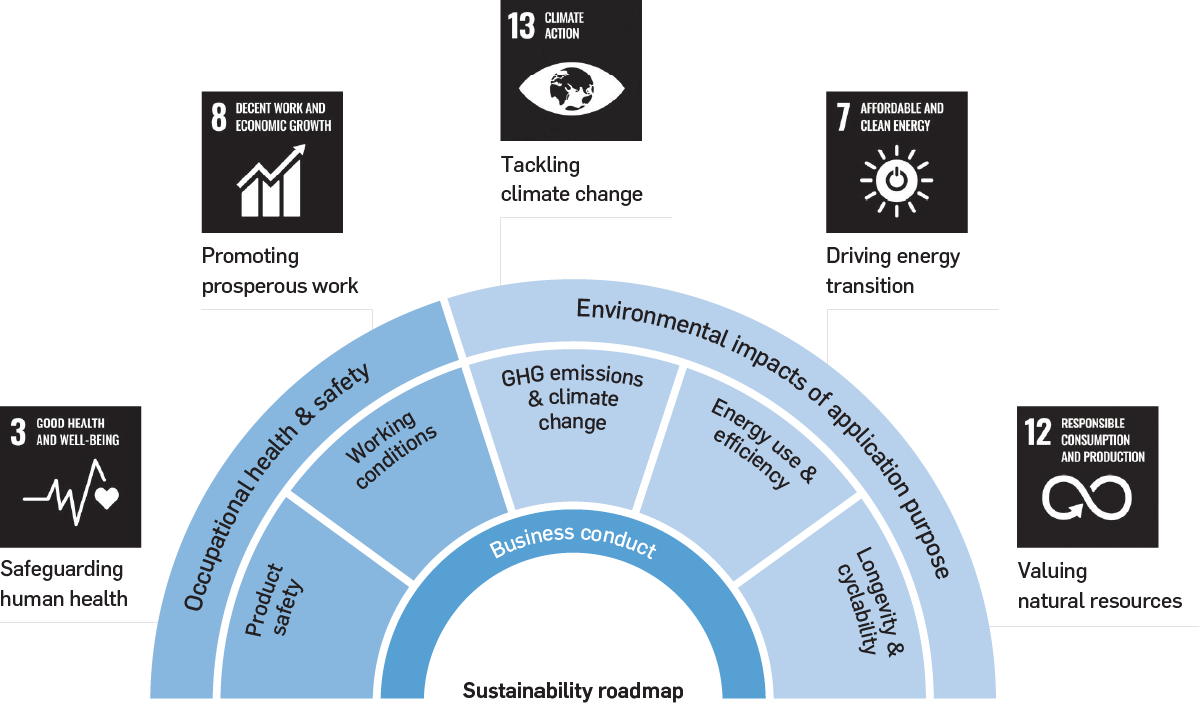
In our approach, we focus on eight material topics, which we identified in our materiality assessment. These eight topics constitute our framework and the core of our sustainability roadmap, we deepened our disclosure on the material topic of greenhouse gas emissions and climate change, following the recommendations of the Task Force on Climate-Related Financial Disclosures.
We are committed to supporting the Sustainable Development Goals (SDGs) as part of United Nation’s Agenda 2030 for Sustainable Development. We have stated five sustainability ambitions, each linked to a strategic SDG and directly related to our eight material topics:
- Safeguarding human health (SDG 3: Good health and well-being)
- Promoting prosperous work (SDG 8: Decent work and economic growth)
- Tackling climate change (SDG 13: Climate action)
- Driving energy transition (SDG 7: Affordable and clean energy)
- Valuing natural resources (SDG 12: Responsible consumption and production)
Accountability for achieving our sustainability ambitions is embedded at senior management level. Sustainability is therefore part of the long-term incentive plan of our top management. Our 2027 target to reduce our greenhouse gas emission intensity by 50%* (2021: 2.1 kg CO₂e/h) is one of three key performance indicators for the long-term incentive plan (see pages 108–109, Annual Report 2025).
Strategic sustainability framework
We reaffirm our Group ambition to achieve net-zero greenhouse gas emissions in our operations by 2035, which goes beyond our Mid-Range Plan target for 2027. We follow a 1.5°C climate aspiration in reference to the Paris Agreement for our Scope 1 and Scope 2 emissions. In addition, we are committed to reducing our Scope 3 emissions (see page 42, Annual Report 2025).
Overarching human rights, environmental, and governance due diligence
Our focus on our material topics and sustainability ambitions is supported by an overarching due diligence approach. We acknowledge the responsibility to respect internationally recognized human rights, and international environmental and governance standards, as set out in our Code of Conduct and Human Rights policy.
We apply the precautionary principle in our activities and decision-making, including product design, supply chain management, and the safe operation of our products at our customers’ sites. Our third-party risk management policy ensures the uphold of our principles from our Code of Conduct in the collaboration with our partners along the value chain.