
energy transition
How our compressors support the decarbonization of aviation
September 23, 2026 8 min read


In the past 5 years, we won over 20 orders for process gas compressors for sustainable aviation fuel (SAF) production. We speak with Besim Fejzuli, Senior Product Manager, and Bharath Moodbidri, Segment Sales Manager, about how our compressors play a key role in the growing SAF momentum.
What is the current SAF policy landscape?
Bharath: Aviation accounts for around 2.5% of global CO2 emissions, and with passenger numbers expected to reach around 8 billion by 2050, the International Air Transport Association targets a 65% reduction in net emissions compared to 2005 levels.
From 2025, the EU’s ReFuelEU Aviation regulation requires that a growing share of the aviation fuel supplied at EU airports is SAF, starting at 2% and rising to 70% by 2050. The USA is using tools like federal and state tax credits, low carbon fuel programs, and private offtake agreements to encourage SAF production. Singapore will introduce a SAF levy on departing flights from 2027, using a passenger charge to fund centralized SAF procurement.
SAF fact box
| What is Sustainable Aviation Fuel (SAF)? | Sustainable Aviation Fuel (SAF) is a certified alternative to conventional jet fuel produced from renewable or waste based feedstocks. A related term is eSAF. |
|---|---|
| What is eSAF? | It is a synthetic aviation fuel made using renewable electricity, green hydrogen, and captured CO₂, instead of biomass or fossil feedstocks. |
| Are SAF and eSAF similar? | Both are chemically similar to fossil kerosene and can be used as a drop-in fuel, as approved for blending with conventional jet fuel up to 50% without any engine or infrastructure changes. |
| Is SAF carbon neutral? | Not completely. SAF lowers overall CO₂ emissions because it is produced from renewable or waste based carbon and then blended with fossil jet fuel. Depending on the feedstock and pathway, it can reduce lifecycle CO₂ emissions by up to 80% compared to conventional jet fuel. |
How do converted refineries differ from newly built SAF plants?
Besim: The main differences relate to the SAF production pathway and the investment cost.
Producers seeking rapid market entry at lower cost often start with Hydroprocessed Esters and Fatty Acids (HEFA) co-processing, where renewable feedstocks such as used cooking oil or animal fats are processed alongside fossil fuels in existing refineries with minimal modifications. Its main limitation is scalability, as only small volumes can be blended due to feedstock impurities.
To increase SAF output, many producers invest more and fully convert traditional refineries. This requires dedicated feed stock pre-treatment systems, significantly increased hydrogen availability, and process upgrades such as isomerization and separation units to meet jet fuel specifications. In fully converted facilities, both HEFA and Alcohol to Jet (AtJ) pathways can be used to produce SAF.
The most expensive option is SAF production via Fischer Tropsch (FT) or Power to Liquid (PtL) pathways. These rely on process units such as gasification, syngas production, electrolysis, and synthesis reactors that do not exist in conventional refineries. Thus, FT and PtL SAF are produced in newly built facilities. While less mature today, they offer the highest long term scalability potential.
Four main SAF production pathways
| Pathway | Feedstock | Market maturity | Cost (today) |
|---|---|---|---|
| Hydroprocessed Esters and Fatty Acids (HEFA) | Lipids (cooking oil, animal fats, vegetable-oils) | Most mature | Medium |
| Alcohol-to-Jet (AtJ) | Bio-alcohols such as ethanol | Scaling up | Medium |
| Fischer-Tropsch (FT) | Biomass, municipal solid waste | Emerging | High |
| Power-to-Liquid (PtL / eSAF) | Captured CO2 and green hydrogen | Early stage | Very high |
Indicative comparison. Maturity and cost depend on feedstock availability, project scale, location, and regulatory incentives.
Does the compressor technology require upgrades?
Besim: No, SAF production does not require new compressor technology, as the same API 618 standards apply. What changes are the application, gas composition, and operating conditions rather than the core technology. Hydrogen compressors are used in HEFA and AtJ processes, while FT and PtL pathways also require syngas and recycle gas compression, all of which are established refinery duties.
Bharath: What we bring is proven API 618 equipment, a strong reference base in comparable duties, and global service support. Our compressors are manufactured in our global production network, including sites in India and China.
How do you then win customers over to our compressors?
Bharath: Naturally, the customer pays attention to the price and we are not always the lowest cost supplier in the market. However, we clearly offer one of the lowest OPEX costs compared to many competitors, as their compressors require more maintenance over time. Our compressors are based on proven, well-established technology, with decades of operating reference in refining, hydrogen, and industrial gas applications.
Fewer maintenance interventions result in lower maintenance costs, reduced downtime, and more predictable plant operation, which are critical OPEX drivers in SAF plants. This performance is supported by durable Redura® ring sealing systems and reliable operation under variable gas loads, which are common in SAF applications.
What is the SAF market outlook?
Besim: I’m confident in long term market growth driven by regulatory mandates and refinery led investments. Our strong relationships with refinery customers provide an advantage, as they trust our compressor reliability and life cycle performance. Since co-processing and refinery conversion are the lowest risk SAF routes, they are prioritized in near and mid term projects, allowing us to capture a growing market share early on.
Bharath: Global SAF demand is expected to increase from about 6 million tons in 2025 to 20-30 million tons by 2030, driven mainly by refinery conversions and new SAF plants. North America is leading this growth, followed by Europe and emerging activity in Asia. Recently, we secured an order for seven compressors at Europe’s first dedicated SAF facility in the Netherlands, reinforcing our position as a trusted technology partner for large scale SAF projects.
Future outlook for SAF pathways: cost and sustainability comparison
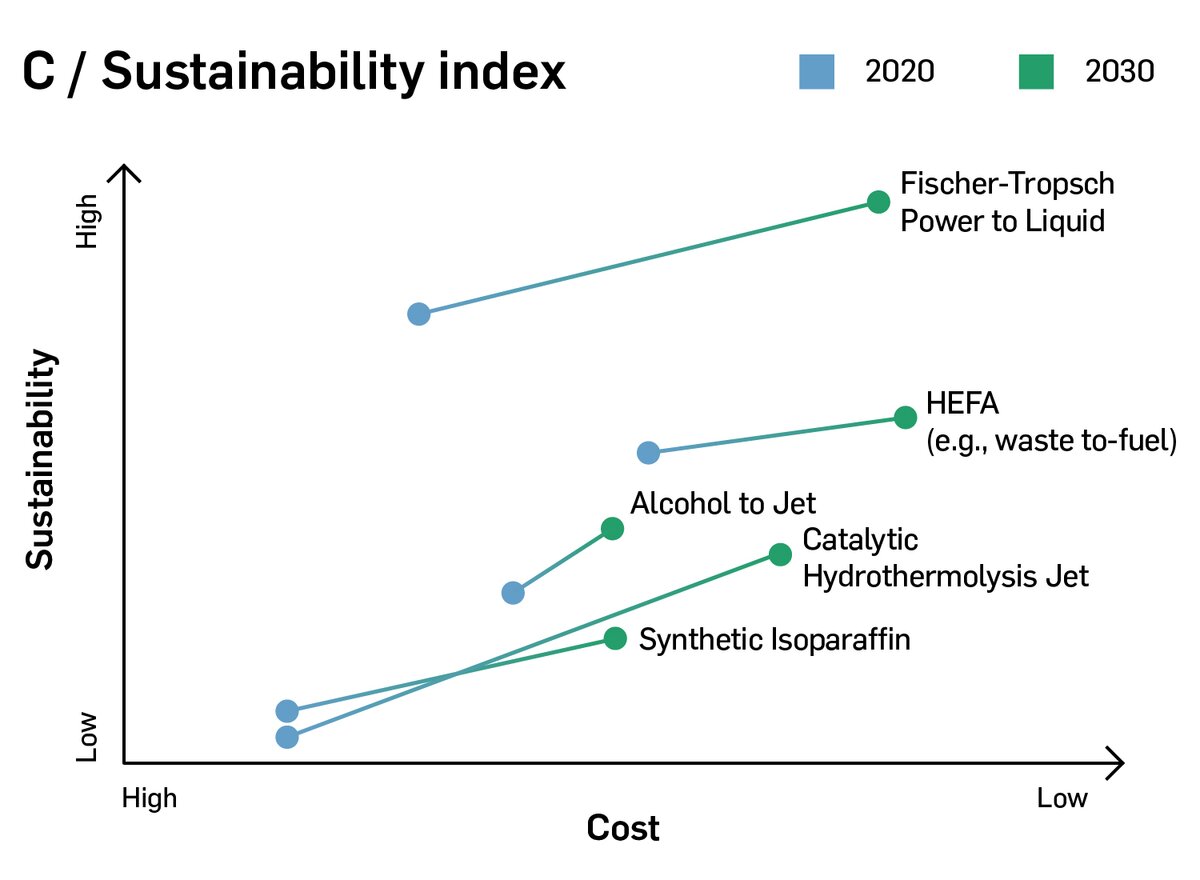
Note: To access “Sustainability”, we assessed CO₂ reduction potential, non CO2 emissions, maximum blend percentage, feedstock availability, land usage, and water usage. To access “Cost”, we separately looked at capital expenditure, feedstock costs, and operational costs.
Key takeaways
- HEFA is currently the most mature SAF pathway, offering the fastest route to commercial SAF production through refinery integration.
- Power-to-Liquid (eSAF) and Fischer-Tropsch offer the highest long-term sustainability potential, making them key technologies for the future of low-carbon aviation.
- Compressors are critical to SAF production, supporting hydrogen, syngas, and recycle gas compression across major SAF pathways.
- Burckhardt Compression's reciprocating compressors help reduce OPEX, delivering high reliability, fewer maintenance interventions, and lower lifecycle costs for SAF plants.
Related
Downloads
- Compression solution for sustainable aviation fuel (SAF) EN pdf 1.01MB
More languages
No other languages available
Contact your sustainable aviation fuels expert
Looking to improve the efficiency and sustainability of your aviation operations? Our experts are here to help.
More insights
The rise of LNG terminals: Optimizing costs and boosting sustainability with our Laby compressor system
LNG terminals become more flexible energy hubs, boil-off gas management is critical for safety, cost efficiency and emissions reduction.
November 4, 2026 8 min read


Enabling Europe’s Hydrogen Backbone: compression technology for large-scale storage
How we are supporting Europe's energy transition.
October 7, 2026 7 min read
